01 / Understand
The financing decision
Is repayment supported by contracted leases, direct parking receipts or a third-party operator?
First identify whether the property owner receives fixed operator rent, a share of parking receipts or direct customer revenue. Those arrangements need different reconciliations. Prepare a capacity-and-cash map for monthly permits, transient use, reserved spaces and periods unavailable for operation; do not value all painted spaces as if each can earn a full monthly permit and full transient revenue simultaneously.
Reconcile legal and usable spaces
The U.S. Access Board’s parking guide explains that accessible-space requirements are considered by parking facility and includes specific exceptions. Have a qualified reviewer assess the actual layout and applicable obligations. Treat access routes, closures and reserved allocations explicitly in the revenue inventory.
Investigate the local inspection regime
New York City’s parking-structure program is an example of jurisdiction-specific condition inspection and reporting obligations. It is not a nationwide rule. Check the actual authority, structure type and current findings for the subject property, then fund supported work and associated closures.
Follow the operator agreement to cash
For a management agreement, reconcile gross receipts, operator compensation, taxes, refunds and owner distributions. For a lease, examine the operator’s rent obligation and available credit evidence. Do not combine operator gross receipts with the owner’s rent as two income streams.
A hypothetical decision
Hypothetical: garage repair during a refinancing
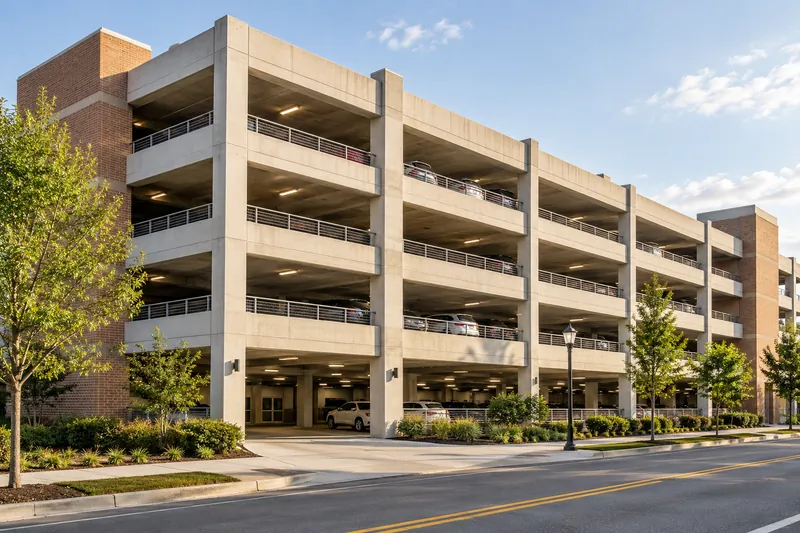
A garage needs phased deck repairs while its owner is refinancing.
Reconcile spaces removed in each phase with permit commitments and transient demand. Compare direct operating cash with any contractual operator rent protection, then combine repair uses and reduced receipts in the equity requirement.
The takeaway: The repair bill and the income interruption are separate cash effects that must be reconciled in the same timeline.
Dedicated to parking lots and garages
Download your niche underwriting package.
Use this dedicated Excel workbook with its lender guide and document checklist. Read the workbook instructions, replace illustrative assumptions with your evidence, and keep the guide beside your analysis.
Model scope and limitations
Permit-reserved spaces are excluded from transient inventory for the entire month, including unpaid permit spaces. No after-hours sharing or overselling is credited. Physical capacity must reflect closures and inaccessible stalls.
Transient receipts use separate spaces times visits per space per open day times operating days times paying utilization. Visits are a turnover assumption, not occupancy. Operating days cannot exceed the selected calendar month.
- All numerical values are illustrative; no market facts or lender approval are asserted.
- The twelve-month operating model omits taxes on investor returns and future refinancing costs except expressly entered items.
- Legal, licensing, environmental, engineering and lender-specific recognition require actual diligence.
Excel .xlsx · PDF .pdf · No email required. Preparation materials do not constitute a loan offer or a lender’s document requirements.
Package reviewed by Jason Taken ·
Next: gather your lender documents ↓Related core asset model
Compare the existing core workbook.
The scope below describes the related core asset workbook. The dedicated niche package above has its own instructions and limitations.
The existing Owner-occupied commercial property model is only a related starting point when independently prepared operating cash is the repayment source.
Model scope and additional analysis
There is no complete parking underwriting workbook here. The owner-occupied model is not suitable as a stand-alone analysis of a leased garage, concession, hourly demand or structural engineering.
Prepare an additional schedule: Build a parking revenue/operator schedule first; use the relevant debt-service and refinance tools only after that cash flow is supported.
Test property-level loan sizing · Check post-closing liquidity
Questions to prepare for a lender
Use these questions to organize a financing discussion. A lender sets its own credit requirements and determines which evidence applies to your transaction.
Who owns the customer revenue and bears operating costs?
Provide the complete operator lease or management agreement and a receipts-to-owner-cash reconciliation, including related-party arrangements.
How is capacity allocated over time?
Map monthly permits, reserved spaces, transient tickets, shared-use restrictions and closures to the same dated inventory and time periods.
What condition work reduces capacity or requires cash?
Obtain a qualified structural/condition assessment, applicable inspection status and a staged repair budget showing unavailable spaces and funding sources.
03 / Prepare
Build your document checklist.
Check off what you have. Your selections stay on this page while it is open; they are not sent to Jaken Finance Group or analytics.
0 of 5 document groups marked ready
Print uses your browser’s PDF option. Checklist selections are for your preparation, not a lender’s completeness determination.
Continue the learning path.
Cash receipts accrual statements and lender income evidence
Determine whether reported operating income is supported by cash collections. Includes accrual-to-cash evidence reconciliation.
Special-use buildings: test the cash and value of an alternate use
Compare same-use replacement, conversion and sale paths after an operator leaves, including time, capital and repayment exposure.
Owner-occupied debt: when no intercompany rent satisfies both entities
Test the operating company’s sustainable rent against the property’s standalone debt requirement before relying on strong global coverage.
Sources and applicability
The references support the specific points identified above. Preparation questions, checklists and hypothetical decisions are the publication’s analysis, not instructions issued by the source or a lender.
- U.S. Access Board — Guide to Parking SpacesRequired Number; ADA §§208 and 502 references and exceptions · Checked 2026-10-21
Accessibility guidance; qualified review must determine actual project obligations and applicable exceptions.
- NYC Department of Buildings — Parking StructuresPeriodic inspection overview and owner assessment/reporting steps · Checked 2026-10-21
Local example only; no NYC cycle or requirement is applied to properties elsewhere.
AI-assisted research and preparation. Published by Jaken Finance Group. Reviewed by Jason Taken on 2026-10-21. Report a correction.