01 / Understand
The financing decision
Can external operating cash cover property debt, fleet debt and working-capital needs together?
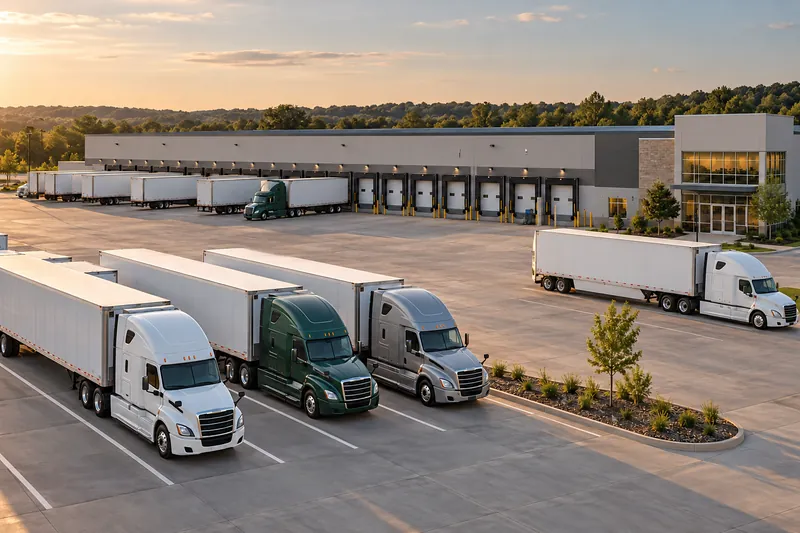
A terminal, dispatch office and fleet yard may support a carrier, broker, warehouse operator or a combination of businesses. Identify which activity earns revenue and which entity owns vehicles, leases equipment and occupies the land. Property rent and operating freight receipts are different cash streams. Our financing questions and document suggestions help organize that distinction; they are not universal lender requirements.
Operating identity must match the revenue case
FMCSA distinguishes USDOT registration from operating authority and explains activity-based exceptions. Identify the actual carrier, broker or other entity and confirm the requirements relevant to its operations with qualified advisers. A terminal’s property ownership does not prove that its occupant has the appropriate current authority, insurance or rights to perform the forecast work.
Sources: FMCSA: Get Operating Authority
Freight revenue needs a route-to-cash bridge
Separate contract and spot work, billed fuel surcharges, deductions, claims and accessorial charges. Show loaded and empty travel where relevant, driver/contractor costs and fleet maintenance. Reconcile invoice activity to customer payments rather than assuming more dispatched loads create proportionate cash. OCC’s working-asset framework supports examining collection timing; it does not supply trucking profit assumptions.
Fleet obligations and yard obligations compete for cash
Place vehicle loans, leases, repairs and replacement alongside property debt and external site expenses. Verify the actual parking, access and operating rights for the terminal through subject documents. For commonly owned property and operating entities, eliminate matching intercompany rent; it cannot be a second repayment source on top of the same freight earnings.
A hypothetical decision
Hypothetical: a larger yard after a contract win
A carrier buys a terminal after securing additional customer work.
The expansion requires more vehicles and payroll before invoices are collected. Test the property payment alongside fleet debt and the customer’s payment timetable, and verify the operating and site rights supporting the work. A full yard is not evidence of collected margin.
The takeaway: Financing capacity depends on the operating cash left after fleet and collection needs, not simply the terminal’s size.
Dedicated to trucking terminals and logistics businesses
Download your niche underwriting package.
Use this dedicated Excel workbook with its lender guide and document checklist. Read the workbook instructions, replace illustrative assumptions with your evidence, and keep the guide beside your analysis.
Model scope and limitations
This model combines business and property cash, deducts listed business obligations, and tests the cash remaining for proposed property debt. It does not calculate standalone landlord NOI or establish lender-defined global coverage.
All miles incur fuel and driver cost; only loaded miles earn the entered net freight rate. Include fuel surcharges and deductions in that net rate exactly once. Enter supported fleet capacity without implying legal hours-of-service permission.
Receivables use current monthly billings times entered days divided by calendar days. Collections equal sales less the signed receivable change; no separate AR deduction is taken. A negative result flags a cash need in this simplified proxy.
- All numerical values are illustrative; no market facts or lender approval are asserted.
- The twelve-month operating model omits taxes on investor returns and future refinancing costs except expressly entered items.
- Legal, licensing, environmental, engineering and lender-specific recognition require actual diligence.
Excel .xlsx · PDF .pdf · No email required. Preparation materials do not constitute a loan offer or a lender’s document requirements.
Package reviewed by Jason Taken ·
Next: gather your lender documents ↓Related core asset model
Compare the existing core workbook.
The scope below describes the related core asset workbook. The dedicated niche package above has its own instructions and limitations.
The Owner-occupied commercial property workbook can organize supported combined cash; Industrial lease cash flow may fit an unrelated terminal landlord.
Model scope and additional analysis
Neither workbook models freight routes, fleet utilization, regulatory authority, fuel costs or vehicle replacement.
Prepare an additional schedule: Add customer/route margin, fleet debt/replacement and receivables-to-cash schedules.
Test property-level loan sizing · Check post-closing liquidity
Questions to prepare for a lender
Use these questions to organize a financing discussion. A lender sets its own credit requirements and determines which evidence applies to your transaction.
Which entity is authorized and contracted to perform the work?
Supply legal entity names, relevant current authority/insurance records and customer contracts matching the forecast activities.
References: FMCSA: Get Operating Authority
How much cash does the freight activity produce after full fleet cost?
Reconcile invoices, fuel/surcharges, claims, contractor/driver costs, maintenance and collections by material service or customer.
Can liquidity cover slower collections and fleet obligations together?
Model cash timing, receivables, existing financing terms and vehicle replacement before committing remaining cash to the property.
References: OCC: Accounts Receivable and Inventory Financing
03 / Prepare
Build your document checklist.
Check off what you have. Your selections stay on this page while it is open; they are not sent to Jaken Finance Group or analytics.
References: FMCSA: Get Operating Authority
References: OCC: Accounts Receivable and Inventory Financing
0 of 5 document groups marked ready
Print uses your browser’s PDF option. Checklist selections are for your preparation, not a lender’s completeness determination.
Continue the learning path.
Owner-occupied debt: when no intercompany rent satisfies both entities
Test the operating company’s sustainable rent against the property’s standalone debt requirement before relying on strong global coverage.
Industrial outdoor storage: legal use and lender collateral
Reconcile surveyed area, documented use rights and leased storage area before presenting industrial outdoor-storage income and collateral to lenders.
Owner-user industrial relocation and double-occupancy costs
Build a monthly transition schedule for old rent, new property debt, moving costs and business disruption before financing an industrial relocation.
Sources and applicability
The references support the specific points identified above. Preparation questions, checklists and hypothetical decisions are the publication’s analysis, not instructions issued by the source or a lender.
- OCC: Accounts Receivable and Inventory FinancingAssessing the Borrower’s Operating Cycle, printed pages 15–16; Evaluating Collateral · Checked 2026-10-21
March 2000 handbook with March 2025 reputation-risk edits. Supports examining cash conversion and working-asset collateral in this lending context. No advance-rate or lender-policy threshold is adopted; niche scenarios are our analysis.
AI-assisted research and preparation. Published by Jaken Finance Group. Reviewed by Jason Taken on 2026-10-21. Report a correction.